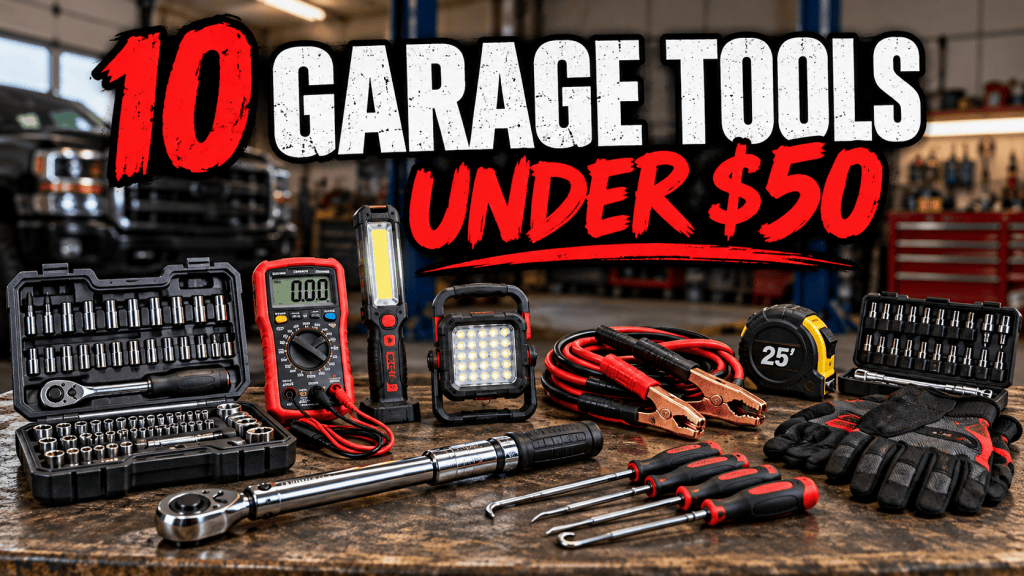
Building a useful garage setup doesn’t mean spending thousands of dollars on tools. Some of the gear you’ll reach for the most is surprisingly affordable. Whether you’re doing basic maintenance, working on a project car, or just want to be better prepared for repairs, these 10 garage tools can make the job easier without destroying your budget.
We picked tools that serve a real purpose in a home garage and can generally be found for under $50. Prices change, so we’ll focus on what to look for and why each tool deserves a spot in your garage.
1. OBD-II Scanner
A basic OBD-II scanner is one of the first tools any DIY mechanic should own. When the check-engine light comes on, it plugs into your vehicle’s diagnostic port and lets you read the trouble codes stored by the computer. Instead of immediately paying a shop just to find out why the light is on, you can get a starting point for diagnosing the problem yourself.
What to look for: Choose a scanner that can read and clear engine codes, display code definitions, and show live data. Bluetooth scanners can be convenient, but a simple handheld scanner with its own screen is great if you want something that works without your phone.
Best for: Check-engine lights, basic diagnostics, used-car inspections, and DIY repairs.
2. Digital Multimeter
Electrical problems can turn into a guessing game fast. A digital multimeter lets you test voltage, resistance, and continuity so you can actually figure out what’s happening instead of throwing parts at the problem.
For automotive work, it’s especially useful for checking batteries, charging systems, fuses, switches, grounds, wiring, and sensors. Even an inexpensive multimeter can handle most basic troubleshooting around a home garage.
What to look for: Choose one with DC voltage, resistance, continuity testing with an audible beep, and replaceable test leads. Auto-ranging is also helpful for beginners.
Best for: Battery testing, electrical diagnostics, finding bad grounds, checking fuses, and troubleshooting wiring.
3. 1/2″ Torque Wrench
Tightening important fasteners by feel might work sometimes, but a torque wrench takes the guesswork out of it. It lets you tighten a fastener to the manufacturer’s specified torque, helping prevent loose hardware, damaged threads, and overtightened bolts.
A 1/2-inch drive torque wrench is especially useful for wheel lug nuts and other larger automotive fasteners. For a DIY garage, a basic click-style wrench can handle a lot of common jobs without costing a fortune.
What to look for: Look for an easy-to-read adjustment scale, a comfortable locking handle, and a torque range that covers the work you plan to do. Always follow the tool manufacturer’s storage and calibration instructions.
Best for: Lug nuts, suspension work, brakes, and other fasteners with specified torque values.
Tightening important fasteners by feel might work sometimes, but a torque wrench takes the guesswork out of it. It lets you tighten a fastener to the manufacturer’s specified torque, helping prevent loose hardware, damaged threads, and overtightened bolts.
A 1/2-inch drive torque wrench is especially useful for wheel lug nuts and other larger automotive fasteners. For a DIY garage, a basic click-style wrench can handle a lot of common jobs without costing a fortune.
What to look for: Look for an easy-to-read adjustment scale, a comfortable locking handle, and a torque range that covers the work you plan to do. Always follow the tool manufacturer’s storage and calibration instructions.
Best for: Lug nuts, suspension work, brakes, and other fasteners with specified torque values.
Tightening important fasteners by feel might work sometimes, but a torque wrench takes the guesswork out of it. It lets you tighten a fastener to the manufacturer’s specified torque, helping prevent loose hardware, damaged threads, and overtightened bolts.
A 1/2-inch drive torque wrench is especially useful for wheel lug nuts and other larger automotive fasteners. For a DIY garage, a basic click-style wrench can handle a lot of common jobs without costing a fortune.
What to look for: Look for an easy-to-read adjustment scale, a comfortable locking handle, and a torque range that covers the work you plan to do. Always follow the tool manufacturer’s storage and calibration instructions.
Best for: Lug nuts, suspension work, brakes, and other fasteners with specified torque values.
4. Rechargable light
Good lighting makes almost every repair easier. A rechargeable LED work light can illuminate dark engine bays, wheel wells, interiors, and the underside of a vehicle without having to hold a flashlight in one hand while trying to work with the other.
Magnetic bases and adjustable heads are especially useful because you can stick the light to a metal surface and aim it directly at the area you’re working on. Rechargeable models also eliminate the hassle of constantly replacing batteries.
What to look for: Look for multiple brightness settings, good battery life, a strong magnetic base, and an adjustable or folding design. A USB-rechargeable model is convenient for both the garage and the vehicle.
Best for: Engine work, brakes, under-dash repairs, roadside repairs, and working underneath vehicles.
5. Magnetic Trays
Few things are more annoying than watching a bolt, nut, or socket disappear somewhere in the engine bay. A magnetic parts tray gives you a simple place to keep small hardware together while you work.
The magnetic base also lets the tray stick to toolboxes, lifts, carts, and other steel surfaces. For jobs involving lots of small fasteners, it can save a surprising amount of time and frustration.
What to look for: Look for a strong magnet, a durable stainless-steel tray, and a rubber-covered magnetic base to help prevent scratching painted surfaces.
Best for: Nuts, bolts, sockets, clips, washers, and keeping small parts organized during repairs.
6. Trim removal kit
Plastic trim clips have a talent for breaking at exactly the wrong time. A trim removal kit gives you several shapes of plastic pry tools designed to remove interior panels, door panels, dash pieces, and exterior trim with less risk of scratching or damaging the surrounding surfaces.
They’re also useful for installing radios, speakers, backup cameras, dash cams, and other accessories where panels need to come apart cleanly.
What to look for: Look for a kit with several different pry-tool shapes and sizes. Strong nylon tools are usually preferable to using screwdrivers around finished plastic or painted surfaces.
Best for: Door panels, dashboards, stereos, interior trim, clips, and accessory installations.
7. Tire inflator
A portable tire inflator is one of those tools you may not think about until you really need it. It lets you add air to a low tire at home or on the road without dragging out a large air compressor or hunting for a gas-station air pump.
It’s also useful for regularly checking and adjusting tire pressure, which can help with tire wear, handling, and fuel economy. Keeping one in your vehicle can be especially handy during road trips.
What to look for: Look for an easy-to-read pressure gauge, automatic shutoff, a long enough power cord or rechargeable battery, and a hose that comfortably reaches all four tires.
Best for: Topping off tires, roadside emergencies, road trips, and routine tire maintenance.
8. 1/2″ Breaker bar
Sometimes a regular ratchet just isn’t enough for a stubborn fastener. A 1/2-inch breaker bar gives you extra leverage to loosen tight lug nuts, suspension bolts, and other stubborn hardware without putting unnecessary stress on your ratchet.
The longer handle makes a huge difference when dealing with fasteners that are rusted or heavily tightened. Just remember—a breaker bar is for loosening stubborn hardware, while a torque wrench should be used when tightening something to a specified torque.
What to look for: Look for a long handle, a comfortable grip, a strong 1/2-inch drive head, and a flexible head that makes it easier to work at different angles.
Best for: Lug nuts, suspension bolts, stubborn fasteners, and general automotive repair.
9. pick and hook set
A pick and hook set is cheap, simple, and surprisingly useful. These small tools can reach into tight spaces where your fingers or regular hand tools can’t, making annoying little jobs much easier.
They’re especially handy for removing O-rings, pulling electrical connectors, positioning small hoses, cleaning grooves, and working with clips and seals. Once you have a set in your toolbox, you’ll probably find yourself reaching for it more often than expected.
What to look for: Look for several tip styles, including straight, angled, hook, and 90-degree picks. Comfortable handles and durable metal shafts are worth having.
Best for: O-rings, seals, electrical connectors, hoses, clips, and detailed repair work.
10. mechanic gloves
A good pair of mechanic gloves helps protect your hands from cuts, scrapes, grime, and hot or sharp components while still allowing enough movement for most repair work. They’re especially useful when working around suspension parts, brakes, tires, and rusty hardware.
For messier jobs involving oil, grease, or other automotive fluids, disposable nitrile gloves can also be useful. Different jobs call for different protection, so it never hurts to keep both types around the garage.
What to look for: Look for a comfortable fit, good grip, reinforced wear areas, and enough flexibility to handle small fasteners. Avoid gloves that are so bulky that they make detailed work difficult.
Best for: General repairs, brakes, suspension work, tire changes, and keeping your hands cleaner.
Final thoughts
You don’t need a massive tool budget to make your garage more capable. The right inexpensive tools can save time, make repairs easier, and help you diagnose problems instead of guessing.
Start with the tools that match the jobs you actually do, then build your collection as you take on more projects. A well-equipped garage isn’t about owning everything—it’s about having the right tool when you need it.


Leave a comment